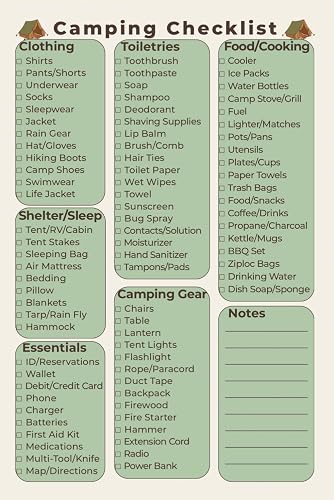
 By Colin Foster
Updated November 2026
A car camping road trip packing list works best when it is built in layers: sleep system first, then cooking, then safety, then comfort. This guide walks you through each layer with checklists you can copy, a packing order that keeps your gear accessible, and the mistakes that most often turn a good trip into a frustrating one. By the end, you will have a list you can adapt to a weekend loop or a two-week route.
Start With Your Trip Profile
Before you pull anything from the closet, write down five facts about the trip. Those facts decide most of what goes in the car.
Shopping for one? See our guide: Scout Camping Packing List: 5 Best Checklist Notepads for Troop Trips.
- Trip length: Number of nights and whether you will stop at the same campsite more than once.
- Number of people and pets: Count everyone, including dogs, because each person changes your bedding, food and water math.
- Expected overnight low: Check the forecast for every night, not just the daytime high. Mountain sites can drop 20°F or more after sunset.
- Campsite type: Established campgrounds with running water need different gear than dispersed sites where you carry everything in.
- Water and power access: Know whether sites offer potable water, electrical hookups or nothing at all.
Write these facts at the top of your list. When you are unsure whether to pack something, the trip profile will usually answer it.
Build the Core Sleep System
Sleep quality decides how the second day feels, so pack this category first and check it twice. Lay everything out on the floor before loading the car so you can see gaps.
Shelter and Sleep Gear
- Tent, with stakes, guy lines and the rainfly. Check the poles for all sections before you leave.
- Tent footprint or ground tarp, sized slightly smaller than the tent floor so rain does not pool under the edges.
- Sleeping bags or quilts rated for the coldest expected low, plus a liner if nights will be cold.
- Sleeping pad rated by R-value. Manufacturers generally specify higher R-values for colder ground temperatures, so a cold-weather trip needs a higher number than a summer trip.
- Pillow, either inflatable or a stuff sack filled with clothes.
- Repair kit with tape for the tent and pad, since punctures and torn fabric are common on longer routes.
Lighting and Power
- Headlamp for each person, with spare batteries or a charging cable.
- Lantern for the campsite table.
- Power bank or portable battery sized for your phones, plus a 12V car adapter.
- Extension cord only if your campsite has hookups and you have confirmed the amperage.
Plan Cooking and Food Storage
Food planning is where most road trips lose time. Plan meals by day, write a shopping list by category, and pack the cooler in the reverse order you will use it.
- Write a day-by-day meal plan, including breakfast, lunch, dinner and snacks.
- Group ingredients by meal so you can pull one bag per meal.
- Pre-chop vegetables and portion dry goods into zip bags at home.
- Freeze water bottles and some meat to act as ice blocks. They thaw slowly and double as drinking water.
- Pack the cooler so the first items you need sit on top, and raw meat sits in a sealed bag on the bottom.
Cooking Kit Checklist
| Item | Quantity to pack | Notes |
|---|---|---|
| Camp stove and fuel | 1 stove, 1 spare fuel canister | Check fuel type matches the stove |
| Cooking pot set | 1 large, 1 small, 1 lid | Nesting sets save space |
| Skillet | 1 | Cast iron is heavy but holds heat well |
| Utensils | 1 set per person | Include a spatula and tongs |
| Plates, bowls, mugs | 1 per person plus 1 spare | Enamel or reusable plastic |
| Cutting board and knife | 1 each | Keep the knife sheathed while driving |
| Dish soap, sponge, towel | 1 each | Use biodegradable soap near water sources |
| Trash bags | Double the number you think you need | Pack out everything |
Pack Safety, Health and Emergency Items
Safety gear belongs within reach, not buried under the sleeping bags. Keep a small kit in the front seat or a daypack you can grab quickly.
- First-aid kit with bandages, antiseptic, tweezers, blister care and any prescription medication in its original container.
- Insect repellent and sunscreen, stored separately from food.
- Map of the route with paper backups, since cell service often drops on rural roads.
- Jumper cables or a portable jump starter.
- Tire inflator, spare tire check and tire pressure gauge.
- Flashlight with spare batteries and a whistle.
- Fire extinguisher suitable for vehicle use, and a small bucket for water.
If you take regular medication or have a chronic condition, talk with your doctor about a packing plan before you leave, including how to keep insulin or other temperature-sensitive drugs at safe temperatures.
Organize Clothing and Personal Items
Clothing for car camping is about layers rather than volume. Pack one clean outfit per day plus two extra layers for warmth and rain, then add a set of sleep clothes that stays dry.
- Base layers (one set per night plus one spare)
- Insulating mid-layer such as a fleece or light puffy jacket
- Waterproof outer shell, even for dry forecasts
- Hat, gloves and warm socks for cold nights
- Camp shoes or sandals for walking around the site
- Toiletries in a sealed bag, with a quick-dry towel
- Sunglasses, sunscreen and lip balm
Use packing cubes or labeled bins for each person. Store the change-of-clothes bin where you can reach it without unloading the whole car.
Load the Car in Order
Packing order matters as much as the list. Load in the sequence you will need items, and keep heavy gear low and centered.
- Place the cooler and heavy water containers low and near the middle of the vehicle, close to the seats.
- Load camp kitchen bins next, in the rear where you can open them first at camp.
- Pack the tent and sleeping gear on top or against the back of the seats, depending on your vehicle.
- Keep the daypack, first-aid kit and car safety items in the front or in a bin you can grab from the passenger seat.
- Stow loose items in the footwell or a cargo net so they do not slide under braking.
Common Mistakes to Avoid
- Underpacking warmth. A summer sleeping bag will not keep you warm in a mountain campsite at night. Check the overnight low, not the daytime high.
- Forgetting to test the tent. Set it up in your yard before the trip. Missing poles and torn seams are much easier to fix at home.
- Packing too much food. Extra meals become spoiled food, and spoiled food becomes trash weight. Plan exact meals and bring one emergency backup.
- Ignoring fuel needs. Running out of stove fuel on the second night is common. Carry at least one spare canister for every three planned cooking days.
- Loading the cooler wrong. Putting ice on top and food on the bottom wastes cold air. Layer ice around and under perishables and keep the cooler closed as much as possible.
- Skipping the dry run. Unpack, repack and drive a short loop before the real trip so you find the gaps.
Recommended gear
These items solve common problems on car camping trips. Check that the specifications match your trip profile before you buy.
- Coleman Propane Camp Stove: A two-burner stove that makes multi-meal cooking easier at established sites. View on Amazon
- Coleman Cooler: Insulated coolers in this line are a common choice for trips of several days. View on Amazon
- Black Diamond Spot 400 Headlamp: A compact headlamp that fits easily in a daypack for camp chores after dark. View on Amazon
- Therm-a-Rest NeoAir XLite Sleeping Pad: A lightweight inflatable pad that manufacturers rate for a range of cold-weather use. View on Amazon
Related Packing Guides
If your trip involves a larger rig, read the Packing List RV Camping: A Step-by-Step Checklist for Your Trip guide for hookup and storage additions. For a shorter route, the Weekend Trip Packing List: A Step-by-Step Checklist for Two Days Away covers a compact version of this list. Tent-focused readers may find Packing List for Tent Camping: A Step-by-Step Checklist for Your Trip useful, and families planning a longer loop should see Packing List for Camping Trip: A Step-by-Step Checklist for Any Season. For the driving side, Packing List Road Trip: A Step-by-Step Checklist for Any Length adds vehicle-specific items.
FAQ
How far in advance should I start packing for a car camping road trip?
Start a week before departure. Use that time to test the tent, charge batteries, check the vehicle, and buy any food that keeps well. Pack perishables on the day you leave.
How much water should I bring?
A common planning guideline is about one gallon per person per day for drinking and basic cooking, with more needed in hot weather or for strenuous activity. Confirm whether your campground has potable water before you rely on it.
Do I need a cooler or a fridge?
A cooler is enough for most weekend trips when you manage ice and keep it closed. A 12V portable fridge suits longer trips or hot climates but needs a reliable power source.
What sleeping pad R-value should I choose?
Manufacturers generally rate pads for specific temperature ranges. Summer camping often works with a lower R-value, while cold-weather trips need a noticeably higher one. Check the specs against your forecast.
Should I bring a tarp?
Yes. A tarp gives you shade or a dry space for cooking and gear, and a ground tarp under the tent helps protect the floor from abrasion.
What if I forget something important?
Check the local area for stores before you leave the highway. Many campgrounds sell basic supplies, but availability varies. Call ahead to confirm before you rely on a specific location.
Is it safe to store food in the car overnight?
Keep food sealed and stored in the car, not the tent, and follow campground rules on wildlife. Check the official campground guidance for bear or animal safety in your area.
Conclusion
A solid car camping road trip packing list starts with your trip profile and then covers sleep, cooking, safety, clothing and loading order. Use the checklists above as a base and adjust for your climate and campsite type. Test everything before you leave so the first night of camp goes smoothly.
Related reading
- Packing List for Car Trip: A Step-by-Step Checklist for Road Trips
- Trailer Camping Packing List: A Step-by-Step Guide for Your Next Trip
Ready to choose one?
About Colin Foster
Colin Foster is part of our editorial team and reviews and edits our travel essentials & packing lists guides, checking product details against manufacturer specifications and owner feedback.