Flying for eight hours or more means spending an extended period in a confined seat with dry cabin air, limited movement, and disrupted sleep. Packing the right items can make the difference between arriving exhausted and arriving ready to explore. This guide covers what to bring for comfort, sleep, hydration, circulation, entertainment, and freshening up, along with advice on what to keep within easy reach at your seat.
Comfort and Layers
Cabin temperatures fluctuate during a long flight, often dropping noticeably after meal service. Dressing in layers lets you adapt without relying on the thin airline blanket. Start with a base layer of breathable, non-restrictive clothing such as a cotton or merino wool top. Add a mid-layer like a fleece or a soft hoodie, and bring a lightweight scarf or pashmina that doubles as a small blanket. Avoid tight waistbands or stiff fabrics that dig in when seated for hours. Slip-on shoes or sneakers that are easy to remove and put back on during security and at your seat are a practical choice; consider compression socks to reduce leg swelling, especially on flights longer than six hours.
Sleep: Pillow, Mask and Noise
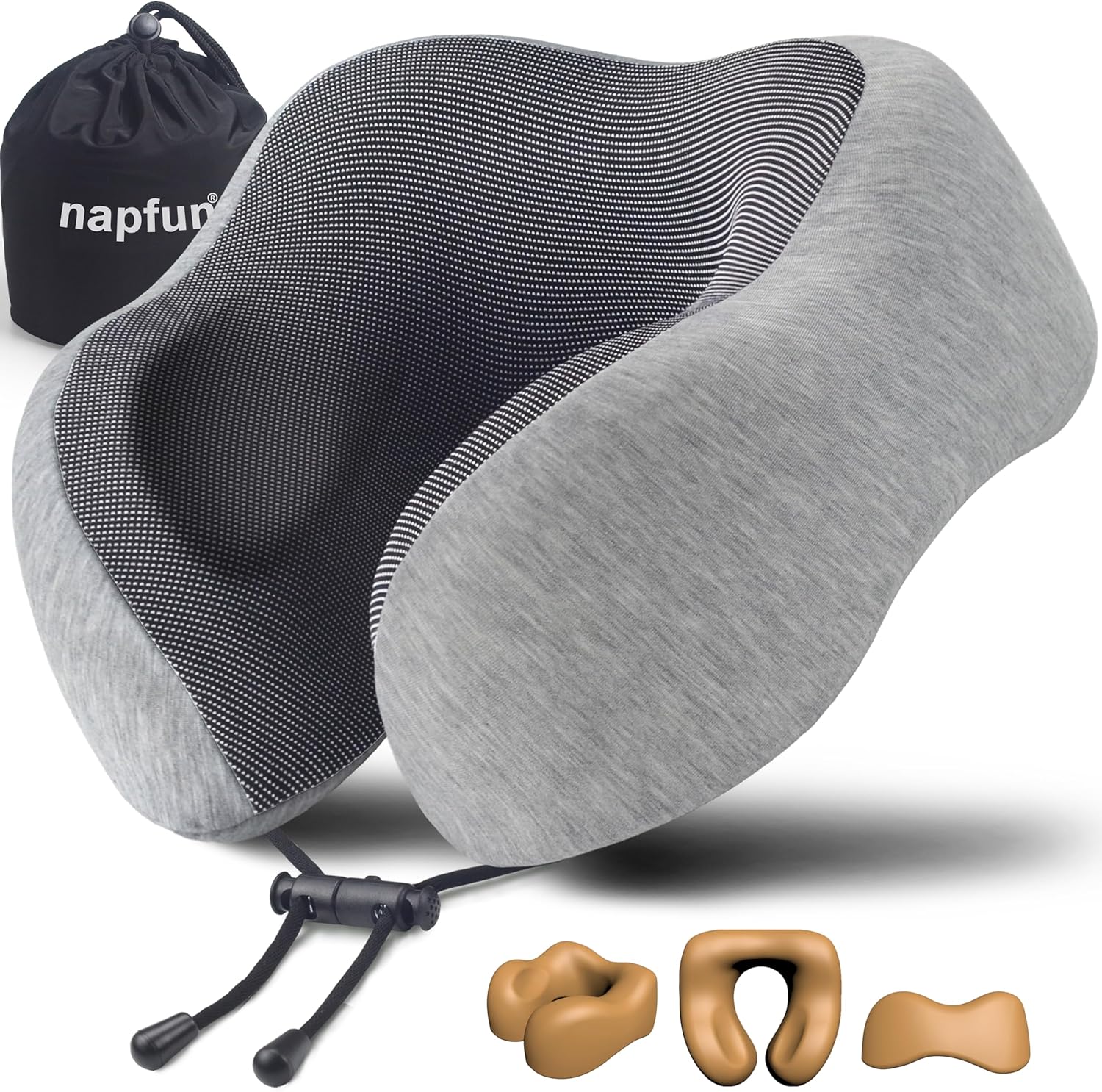
Sleeping in an upright seat is challenging, but the right gear can help you get meaningful rest. A good travel pillow supports your neck and prevents that head-bobbing wake-up. Look for a neck pillow that matches your sleeping style — U-shaped pillows support the sides and back, while inflatable models pack small and let you adjust firmness. Memory foam or microbead fillings offer more stability than air for side sleepers. For blocking light, an eye mask is essential; choose a contoured mask that doesn’t press on your eyes. Noise-canceling headphones or earplugs reduce engine drone and cabin chatter. If you use wireless earbuds, ensure they have enough battery life for the flight or bring a backup wired pair. Some travelers also use a small lavender or chamomile spray on their pillow or scarf to create a calming scent cue.
Hydration and Dry Air
Cabin air on long flights is very dry, which dries out your skin, eyes, and nasal passages. Drinking water regularly is the most effective countermeasure. Bring an empty reusable water bottle through security and fill it at a terminal water fountain or hydration station after the checkpoint. Aim to sip water throughout the flight rather than chugging large amounts at once. Avoid excessive caffeine and alcohol, as both are dehydrating. Pack a small tube of moisturizer or facial mist to refresh your skin, and lip balm with SPF to prevent chapped lips. Saline nasal spray can help keep nasal passages moist and reduce the risk of irritation or nosebleeds. If you wear contact lenses, switch to glasses for the flight to avoid dry-eye discomfort; bring rewetting drops if you must wear contacts.
Moving Around and Circulation
Sitting still for hours increases the risk of deep vein thrombosis (DVT) and general stiffness. The CDC recommends moving your legs regularly during long travel. Get up to walk the aisle once an hour when the seatbelt sign is off. While seated, do simple exercises: ankle circles, heel raises, knee lifts, and shoulder rolls. Compression socks or flight socks can help maintain blood flow and reduce swelling; put them on before the flight. Avoid crossing your legs for long periods, as that restricts circulation. If you have a history of blood clots or other circulatory issues, consult your doctor before flying. For more general travel health information, see the CDC Travelers’ Health page.
Entertainment and Charging
Long flights often have seatback screens, but the selection may be limited or the system may malfunction. Download movies, TV shows, podcasts, audiobooks, and music to your phone, tablet, or laptop before you leave home. Also download a few offline games or reading apps. Bring a fully charged power bank that meets FAA guidelines for lithium batteries — check the FAA PackSafe page for lithium battery rules. FAA rules allow power banks up to 100 watt-hours (Wh) in carry-on baggage, larger ones up to 160 Wh only with airline approval, and some airlines set stricter limits. Pack a charging cable that matches your device, and consider a multi-charger cable if you carry multiple devices. Some aircraft seats have USB ports, but they may provide low power; a power bank ensures you can recharge fully. For more details on power bank regulations, see our guide to power bank rules on planes.
Freshening Up
After hours in a pressurized cabin, a quick refresh before landing can make you feel more human. Pack a small toiletries bag that complies with TSA liquids rules — each container must be 3.4 ounces (100 milliliters) or less, and all containers must fit in a single quart-sized clear bag. See the TSA liquids rule for details. Include travel-sized toothpaste and a toothbrush, facial wipes or micellar water wipes, deodorant, a comb or hairbrush, and a small bottle of hand sanitizer. A dry shampoo spray or powder can revive greasy hair. A small pack of tissues or a handkerchief is useful for spills or dry noses. If you wear makeup, bring only what you need for a quick touch-up before landing. For a full list of carry-on toiletries, refer to our carry-on essentials checklist.
What to Keep at Your Seat
Having key items easily accessible saves you from rummaging through overhead bins during the flight. Pack a small personal bag or the front pocket of your carry-on with the following essentials. The table below summarizes what to keep within reach.
| Category | Items |
|---|---|
| Comfort | Neck pillow, eye mask, earplugs or headphones, lightweight scarf or blanket |
| Hydration & Snacks | Empty water bottle (fill after security), lip balm, moisturizer, healthy snacks (nuts, granola bars, dried fruit) |
| Health & Hygiene | Hand sanitizer, facial wipes, tissues, saline nasal spray, compression socks (wear them) |
| Entertainment | Phone, tablet, or e-reader with downloaded content, power bank and charging cable, wired earbuds as backup |
| Documents & Valuables | Passport, boarding pass, wallet, travel insurance card, visa documents if needed |
Keep your passport and boarding pass in a zippered pocket or a small pouch that stays on your person. A reusable water bottle can be clipped to your bag or placed in the seatback pocket. Store snacks in a small zip-top bag so they don’t get crushed. If you plan to sleep, have your pillow, mask, and earplugs ready before takeoff so you can settle in quickly after the seatbelt sign turns off.
FAQ
Can I bring a reusable water bottle through airport security?
Yes, as long as it is empty when you go through the security checkpoint. Fill it at a water fountain or hydration station on the secure side of the airport. Some airports also have bottle-filling stations.
Do I need to bring my own food on a long flight?
It is not required, but packing your own snacks gives you control over what you eat and can be helpful if you have dietary restrictions or if the meal service does not appeal to you. Choose non-perishable, non-messy items like nuts, granola bars, or dried fruit.
How often should I get up and move during a long flight?
A general guideline is to walk the aisle once every hour when the seatbelt sign is off. While seated, do ankle circles, heel raises and knee lifts regularly to encourage blood flow.
What should I do if my device battery runs low and there is no seat power?
Use a power bank that you have packed in your carry-on. Make sure it is charged before your trip and that it meets the airline’s watt-hour limit.
Preparation is the key to a comfortable long-haul flight. By packing layers, sleep aids, hydration supplies, entertainment, and a small freshen-up kit, you can arrive at your destination rested and ready. For a complete list of what to bring on any international trip, see our international travel checklist. Check the latest TSA and airline rules before you pack, and always keep your essential documents and valuables close at hand.