Packing for an international trip means carrying a small set of items that cover your identity, payment, communication, and health while you are away from home. This guide focuses on what goes inside your bag, not the administrative steps you handle in the weeks before departure. Once your paperwork is ready, use this checklist to gather the travel essentials.
Before you start
The tasks that happen before you pack are just as important as the packing itself. Passport validity, visa requirements, travel insurance enrollment, hotel confirmations, and any required vaccinations all belong in your pre-trip preparation guide. Complete those steps first, then work through the checklist below.
The international travel packing checklist
Most international travelers need the same core set of physical items, organized into five categories. You can adapt the list to your destination, trip length, and personal needs.
Important documents and copies
Your passport is the single most important item for international travel. Keep the passport in a secure place, such as a front zippered pocket or a secure inside pocket of your daypack. Consider putting it in a passport holder to protect the cover and keep a spare card or paper documents with it, but remember that no holder replaces careful awareness of your bag.
Carry a photocopy of the passport’s main page separate from the physical passport. Save a digital copy in a secure password manager or in a private folder on your phone. If your passport is lost or stolen, a copy makes it much easier to visit a U.S. embassy or consulate and begin the replacement process.
Travel insurance documents should be accessible in two forms: a printed card or page in your daypack and a digital version on your phone. Save the emergency assistance phone number and your policy number in your contacts so you do not have to search for them under stress.
Include a simple pen in an outer pocket of your daypack. Customs and arrival forms often appear right after landing, and a pen lets you fill them out before you reach the front of the line.
Money and payment essentials
Bring payment cards that do not charge foreign transaction fees as your primary way to pay. Pack at least one backup card that you keep in a separate location from the first, such as a hidden pocket or a different section of your bag. That way, a lost, declined, or frozen card will not cut off your access to funds.
Carry a small amount of local currency for the first few hours after arrival. Some destinations rely on cash for taxis, tips, and small street vendors, even if cards are widely accepted elsewhere. Withdraw additional local currency from an ATM at your destination rather than carrying a large amount of cash from home. Always keep cash and cards in separate places.
Connectivity and power
Your phone is your map, translation tool, and camera, so plan for reliable connectivity. A phone plan with international coverage or an eSIM lets you access data without hunting for Wi-Fi. Confirm with your mobile provider that your plan works in the countries you are visiting, and save offline maps for the areas where you expect to be.
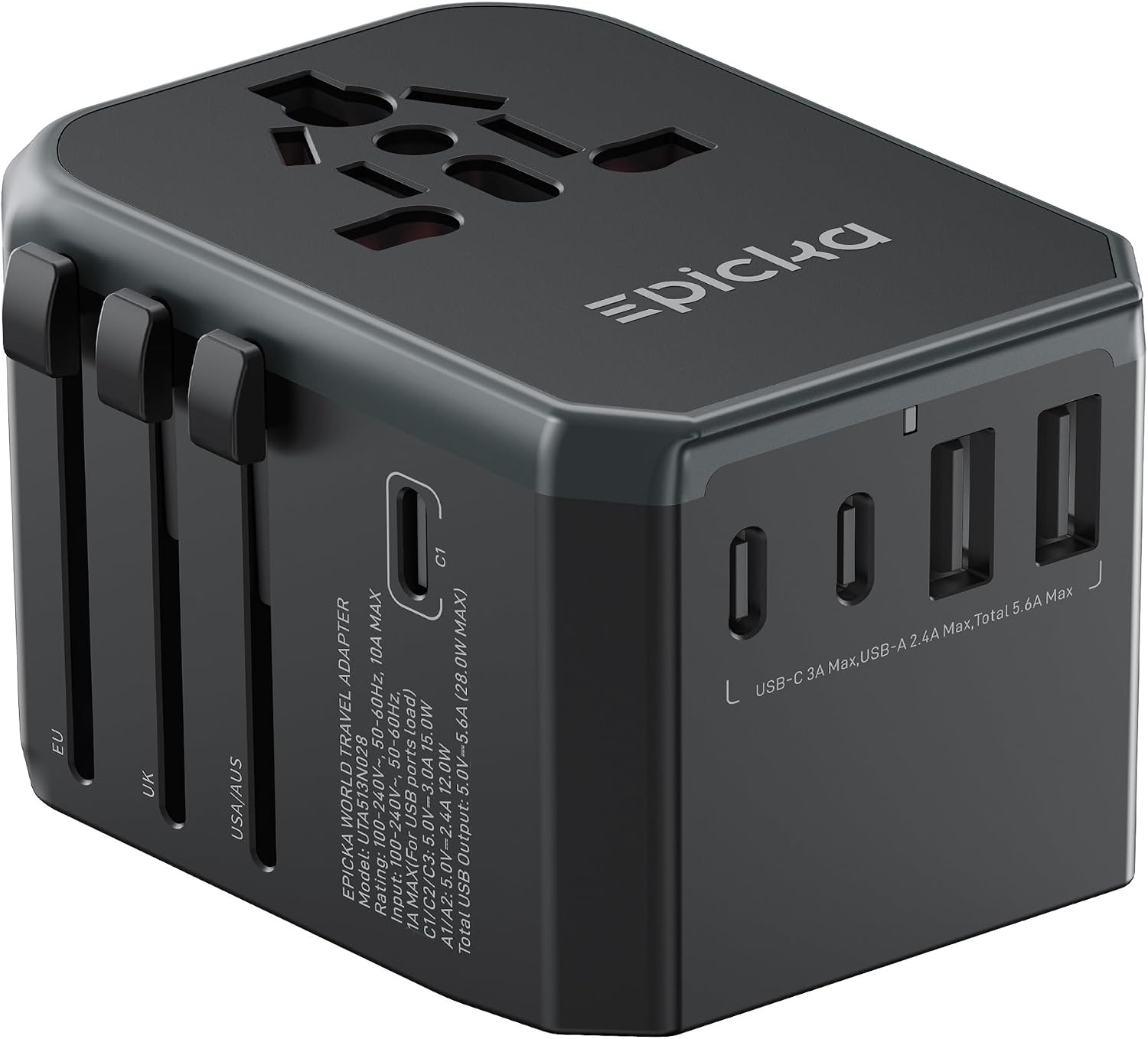
Bring a universal travel adapter that fits the outlets in the countries on your itinerary. Plug shapes and voltage differ around the world, so check the specifications for your destination before you pack. Our travel adapter guide explains the differences between outlet types and voltage compatibility.
A power bank is a practical companion for long flights, airport waits, and days spent navigating an unfamiliar city. Remember that spare lithium batteries and power banks must go in your carry-on bag, never your checked luggage. Keep them protected from metal objects and check the airline’s rules about battery capacity before you fly.
Health and safety items
All medications, prescription and over-the-counter, should stay in their original containers with the pharmacy label or manufacturer label intact. Keep them in your carry-on bag so you have access during the flight and in case your checked luggage is delayed. If you take a medication that could be considered controlled in another country, ask your doctor or pharmacist for guidance and carry the appropriate documentation, such as a signed note, before you travel.
Do not put your travel insurance documents out of reach. They belong in the same document section of your daypack, ideally with the emergency assistance number saved in your phone. If you have medical conditions that involve injectable medications or specialty supplies, keep those in a separate clear bag and know the destination country’s rules for entry.
Bags and practical extras
A small daypack works as your personal item and gives you a hands-free way to move through airports, train stations, and city streets. The daypack should be large enough to hold your documents, money, power bank, adapter, medications, and a light outer layer. Keep the daypack on your front in crowded areas and never leave it out of reach.
At airport security, follow current TSA guidance. For most travelers, shoes can stay on at standard checkpoints, so pack with the expectation that everything inside your bag will be screened. To avoid surprises at security, review the current rules for liquids, electronics, and power banks before you leave. For a broader look at carry-on strategies, see our airport essentials guide.
What you can skip
Packing light is easier when you leave room for items that are replaceable at your destination. You can usually skip bulky towels, hairdryers, and heavy toiletries if you confirm your accommodation provides them. Large amounts of cash and unnecessary valuables are better left at home. For most trips, you do not need to bring a full supply of everyday products; buying small quantities when you arrive can save space and make your bag easier to manage.
Quick-reference table
| Category | What to pack |
|---|---|
| Documents | Passport, photocopies, travel insurance documents, pen |
| Money | No-foreign-transaction-fee cards, backup card, small amount of local currency |
| Connectivity | Phone plan or eSIM, universal travel adapter, power bank |
| Health | Medications in original containers, support for any medical needs |
| Practical | Small daypack, light outer layer, personal security items |
FAQ
Can I use my REAL ID instead of a passport for international travel?
No. A passport is required for international travel. The REAL ID only satisfies identification requirements for domestic flights within the United States, and enforcement began on May 7, 2025. For any flight that crosses an international border, you need a valid passport.
Should I carry my passport in a passport holder?
A passport holder can protect your passport and keep your documents together, but it is optional. If you use one, still keep the passport in a secure, zippered pocket and avoid wearing it in a back pocket or an open bag. The holder is not a security device; your attention is the most important layer.
Can I put a power bank in my checked luggage?
No. Spare lithium batteries and power banks must be in your carry-on bag, not checked luggage. This rule is in place for safety reasons, so keep your power bank in your daypack or another carry-on and cover its terminals to prevent contact with metal objects.
What is the best way to handle medication while flying internationally?
Keep all medication in its original container with the label clearly visible. Pack it in your carry-on so you have it during flight delays and in case your checked bag does not arrive with you. If you carry a controlled substance, check the rules of the country you are visiting and speak with your doctor or pharmacist before you go. For medication dose questions, always ask your doctor or pharmacist.
Use this list as your starting point, then tailor it to your destination, the season, and your personal needs. The best international travel packing is the kind that keeps your essential items with you and leaves space for the discoveries and purchases you make along the way.