 By Caleb Morgan
Updated November 2026
Travel trailer essentials for newbies come down to three things: the gear that connects and levels your rig, the supplies that keep you safe on the road, and the everyday items that make a small space comfortable. This guide walks you through each category in the order you’ll actually need them, from the driveway hookup to the first night at the campsite. By the end, you’ll have a packing list you can adapt to any trip length.
Start With the Tow Setup and Hookup Gear
Before you think about pillows or coffee mugs, make sure your trailer can be safely attached to your tow vehicle and kept level once parked. Most first-timers underestimate how many small connection parts are needed. Missing one of them can cost you an entire afternoon at a campground.
Shopping for one? See our guide: Plane Carry On Essentials: 4 Best Travel Bottles for Every Flight.
Hitch and Connection Basics
- Weight-distribution hitch or sway control, if your trailer’s manual calls for one
- Ball mount and ball matched to the coupler size (commonly 2 inches for light trailers, but confirm your specific trailer)
- Safety chains crossed under the tongue, plus the breakaway cable
- 7-pin or 4-pin wiring adapter so your brake and turn signals work
- Working tire pressure gauge and a portable air compressor
Leveling and Stabilizing
A trailer that isn’t level will drain poorly, rock when you walk inside, and can throw off your refrigerator, which relies on level ground to work properly on many absorption models. Pack wheel chocks, leveling blocks or ramps, and a stabilizer jack set. Practice leveling in your driveway before your first trip, not in the dark at a campsite.
Water and Sewer Connections
Expect to carry a fresh water hose rated for drinking water (labeled as such), a pressure regulator, a sewer hose with a donut seal and a clamp, and a set of disposable gloves. Many campgrounds also require a dedicated sewer hose support. Keep these in a sealed bin so they don’t contaminate your clean gear.
Safety and Emergency Items
Safety gear is the category newbies most often skip, and it’s the one you’ll wish you had at 10 p.m. with a dead battery or a smoke alarm chirping. Check your trailer’s built-in alarms before each trip and replace batteries on a set schedule.
- Carbon monoxide alarm and smoke detector, both with fresh batteries (test before every trip)
- Fire extinguisher, rated for at least a B-C class, mounted within reach of the door
- Jumper cables or a jump starter pack for your tow vehicle and the trailer’s house battery
- Spare tire in good condition, plus a lug wrench and jack matched to your trailer’s weight
- Flashlight or headlamp with spare batteries
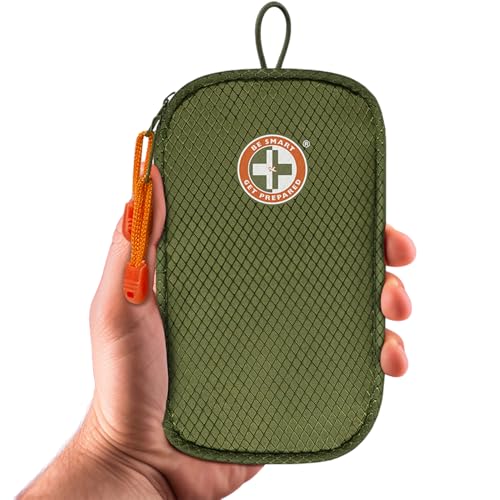
- First-aid kit stocked for your group’s needs
If you rely on propane for heat, cooking or the refrigerator, have a qualified RV technician inspect your system annually, and consult a professional about any gas-appliance concerns.
Kitchen Essentials for a Small Galley
Trailer kitchens are compact, so pack for function. Bring only what you’ll use daily, and choose nesting or stackable cookware where possible. A few well-chosen tools will cover most meals.
Cookware and Tools
- One or two nonstick pans and a saucepan with a lid
- Cutting board, chef’s knife, paring knife
- Silicone spatula, wooden spoon, tongs
- Collapsible colander and mixing bowls that stack
- Dish soap, a small dish tub, and quick-dry towels
Food Storage and Cooler Management
If your trailer has a refrigerator, it will need to be run on shore power or propane, and it takes time to cool down after you connect. Pre-chill food at home and pack perishables in a cooler with ice or frozen water bottles as a backup. Use clear, stackable containers so you can find items without unloading the whole fridge.
Sleep, Comfort and Climate
A good night’s sleep matters more than almost anything else on a trailer trip. Trailers vary a lot in insulation and ventilation, so pack for the conditions you’ll actually face.
Bedding and Layers
Bring a bedding set sized to your trailer’s mattress (dimensions differ from standard home beds, so measure before you buy). Pack at least one extra blanket and a set of layers. Trailers can get cold overnight in spring and fall even when the daytime temperature is mild.
Ventilation and Temperature
Portable fans, a small space heater rated for RV use, and window coverings for privacy and heat control are common additions. Check your trailer’s maximum electrical load before plugging in high-draw appliances, and never run a space heater unattended.
Power, Electronics and Lighting
Most trailers run on a combination of shore power (from a campground pedestal), a house battery, and sometimes a generator. Know which one you’re relying on for each task. Pack a surge protector rated for RV use, a 30-amp or 50-amp adapter as your trailer requires, and a set of extension cords rated for outdoor use. Battery-powered lanterns and a USB charging hub will keep phones and tablets topped off without drawing heavily on the house battery.
Common Mistakes Newbies Make
- Overpacking. Trailers have a payload limit. Weigh your loaded trailer at a certified scale if you can, and keep heavy items low and centered over the axle.
- Skipping a practice run. Hook up, drive around the block, and set up camp at home first. Most first-trip problems are discovered in the driveway, not on the highway.
- Forgetting the tongue weight. Too little tongue weight causes sway. Too much overloads the hitch and tow vehicle.
- Ignoring tire age. Trailer tires can age out even with low mileage. Check the date code on the sidewall.
- Using drinking water hoses for sewer, or vice versa. Keep them color-coded and stored separately.
Tips for Your First Trip
- Pick a campground within two hours of home so you can return easily if something breaks.
- Make a setup checklist and a teardown checklist, and go through them in order every time.
- Pack a small toolkit with adjustable wrenches, zip ties, duct tape, and a multi-tool.
- Download offline maps and note the campground’s phone number, since cell coverage can be spotty.
- Give yourself extra time on the first day. Setup always takes longer than you expect.
Recommended gear
These items address the setup and safety steps covered above, and each is widely available in the RV accessories category.
- A dual-purpose hitch tool or ball-and-mount set helps you connect and disconnect cleanly, since misaligned hitches are one of the most common early frustrations. View on Amazon
- A portable tire inflator with a built-in gauge lets you check and correct pressure before each trip without visiting a gas station. View on Amazon
- Leveling blocks or ramps make it far easier to get the trailer level on uneven ground without reaching for a jack. View on Amazon
- A dedicated sewer hose kit with a support and clamps keeps your waste connection secure and reduces the mess of first-time hookups. View on Amazon
For more packing ideas, see Travel Trailer Hitch Accessories: 9 Essentials to Pack and Install (2026), which covers the hitch gear in more depth, and Travel Trailer Bathroom Accessories: A Practical Guide (2026) for compact bathroom setup. If you plan to camp outside your trailer, Travel Trailer Awning Accessories: 9 Add-Ons Worth Installing has useful additions, and Travel Trailer Accessories Ideas: 9 Add-Ons That Make Life Easier offers more ideas once the basics are covered.
FAQ
Do I need a special license to tow a travel trailer?
In most US states, a standard driver’s license is enough for trailers under a certain combined weight, but rules vary. Check your state’s motor vehicle agency and confirm your tow vehicle’s rated towing capacity in its owner’s manual.
What size hitch do I need?
Hitch class and ball size depend on the trailer’s gross weight and tongue weight. Your trailer’s documentation and your tow vehicle’s manual list the required ratings. Match both before buying.
How much water should I bring on the first trip?
Many trailers hold a fresh water tank, but a backup supply is useful if the pump fails or water is unavailable. Carry at least a few gallons of drinking water per person per day as a reserve.
Can I run the air conditioner on a standard household outlet?
Usually not. Roof air conditioners typically require a 30-amp or 50-amp connection and draw significant power. Check the unit’s rating and your campground’s pedestal before running it.
How often should I service my trailer?
Service intervals depend on the manufacturer. As a general practice, inspect the tires, brakes, bearings, and propane system before each season, and have professionals handle anything beyond basic checks.
What should I do if the trailer sways on the highway?
Reduce speed gently, avoid sudden steering inputs or braking, and pull over safely when you can. Check tongue weight, load distribution, and tire pressure before the next trip.
Do I need insurance for a travel trailer?
Many owners carry dedicated RV insurance, which can cover liability and physical damage. Speak with a licensed insurance agent to understand what your policy includes.
Conclusion
Travel trailer essentials for newbies are easier to manage when you group them by purpose: hookup and leveling gear, safety items, kitchen and sleep basics, and power. Build your list around those categories, then do a practice setup at home before you leave. Your first trip will be smoother, and each one after will teach you what to add or drop.
Ready to choose one?
About Caleb Morgan
Caleb Morgan is part of our editorial team and reviews and edits our travel essentials & packing lists guides, checking product details against manufacturer specifications and owner feedback.