Preparing for a trip that lasts months requires more than a standard packing list. You need to handle documents, finances, health, technology, and your home base while you are away. This guide covers the essentials for long-term travel, organized by category, so you can leave with confidence and handle problems before they arise.
Before You Start: Home Administration and Mail
Setting up your home front is the first step. Arrange mail forwarding through the USPS or a private mail scanning service so you can receive important documents remotely. Notify your bank and credit card companies of your travel plans to avoid account freezes. Pause subscriptions, cancel services you won’t use, and arrange for someone to check your property or forward packages. If you rent, inform your landlord or property manager. These steps prevent headaches and help you stay organized on long trips.
Long-Term Travel Packing Checklist
Below is the core checklist for months on the road. For clothing and general packing, see the separate long trip packing list.
Documents and Visas
- Passport and visa copies – Carry physical photocopies and digital scans (in a secure cloud or encrypted drive). Keep copies separate from the originals.
- Visa requirements – Check entry rules for every country you plan to visit. Some require visas obtained in advance; others offer visa on arrival or e-visas. Print approval documents if needed.
- Driver’s license and International Driving Permit – If you plan to drive, get an IDP before leaving. Many countries require both your domestic license and the IDP.
- Travel insurance documents – Print your policy summary and emergency contact numbers. Keep a digital copy too.
- Emergency contacts and medical information – List your blood type, allergies, existing conditions, and emergency contacts in a card you carry with your passport.
- REAL ID – Since May 7, 2025, a REAL ID (or another acceptable ID) is required for domestic flights within the US. Check TSA’s REAL ID page for details if you plan to return to the US and fly domestically.
Banking and Backup Cards
- Two debit cards – Keep one in your wallet and one hidden in your luggage. Use cards with no foreign transaction fees and wide ATM network access.
- Two credit cards – One primary, one backup. Notify issuers of your travel dates and destinations.
- Emergency cash – A mix of US dollars and local currency for your first destination. Store in multiple places.
- Digital payment apps – Set up a payment or money transfer app on your phone, but do not rely on it as your only option.
- Bank and card customer service numbers – Write them down or save them offline in case you lose your phone.
Travel Insurance with Long-Stay Coverage
- Comprehensive travel insurance – Look for a policy that covers medical evacuation, trip interruption, lost baggage, and emergency dental. Verify that the policy covers the full duration of your trip (some have maximum trip length limits).
- Medical evacuation coverage – Essential for remote areas where local hospitals may not be adequate.
- Cancel-for-any-reason add-on – Optional but useful if you might need to cut the trip short for reasons not covered by standard policies.
- Policy details – Read exclusions carefully, especially for pre-existing conditions, adventure sports, and high-value electronics.
Health: Prescriptions, Vaccinations, and Checkups
- Prescription medications – Bring enough for the entire trip plus a two-week buffer. Keep them in original labeled bottles. Carry a doctor’s note explaining the need for each medication. Check the TSA What Can I Bring page for medication rules.
- Vaccinations – Visit the CDC travelers’ health pages for destination-specific recommendations. Get routine vaccines (flu, MMR, tetanus) and travel-specific ones (hepatitis A, typhoid, yellow fever, etc.) well before departure.
- Dental check – See your dentist before leaving. A small cavity can become a major problem abroad. Get a cleaning and any necessary work done.
- First-aid kit – Include bandages, antiseptic, pain relievers, antihistamines, diarrhea medication, and any personal items. Do not include prescription medications in the first-aid kit unless they are in labeled bottles.
- Prescription glasses or contacts – Bring a spare pair of glasses and enough contact lenses for the trip. Carry your prescription.
Phone, Data, and Connectivity
- Unlocked phone – Ensure your phone is unlocked so you can use local SIM cards. Alternatively, get an international eSIM plan from a provider that covers your destinations.
- Backup phone or dual-SIM – Consider a cheap backup phone or a dual-SIM phone to keep your home number active while using a local data plan.
- Portable power bank – Spare lithium batteries and power banks must be carried in your carry-on bag, never checked. Check the FAA PackSafe lithium batteries page for size limits.
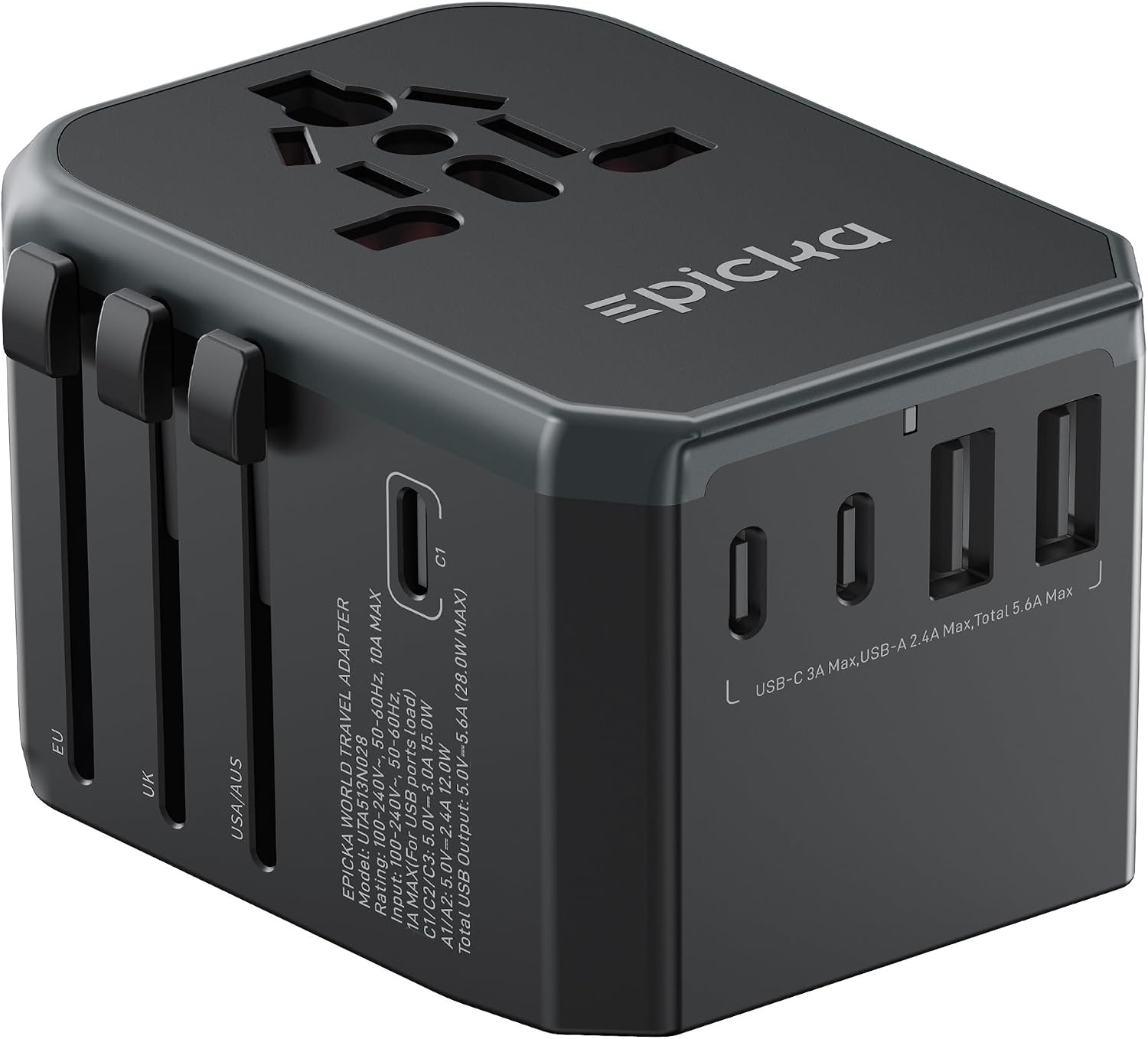
- Charging cables and adapters – Bring a universal travel adapter, a multi-port USB charger, and extra cables. Label them with your name.
- Offline maps and translation apps – Download maps for your destinations and a translation app that works offline.
Laptop and Backups
- Lightweight laptop or tablet – Choose a device that fits your work or personal needs. A tablet with a keyboard may suffice for light tasks.
- External hard drive or large USB drive – Back up important files (passport scans, insurance documents, travel itineraries) regularly. Keep the backup in a separate bag.
- Cloud storage – Sync critical documents to a secure cloud service. Use two-factor authentication.
- VPN service – A VPN helps secure your connection on public Wi-Fi. Set it up before you leave.
- Small surge protector – Useful in older buildings or when you need extra outlets.
Repair Kit
- Basic sewing supplies – A a small repair kit with needles, thread, buttons, and safety pins. Handy for torn clothing or bag straps.
- Duct tape (small roll or flat pack) – Repairs gear, patches holes, and serves a hundred other purposes.
- Multi-tool – Check TSA rules: multi-tools with blades are not allowed in carry-on bags. Pack it in checked luggage or buy one at your destination.
- Zip ties and cable ties – Secure zippers, fix broken buckles, or create makeshift hooks.
- Super glue – Repairs shoes, electronics casings, and small gear.
What You Can Skip
Long-term travel does not mean bringing everything you own. Leave behind:
- Too many clothes – Stick to a capsule wardrobe of versatile, quick-dry items. You can do laundry on the road. See the long trips page for clothing guidance.
- Heavy guidebooks – Use digital versions or a single regional guidebook. Download PDFs or use apps.
- Expensive jewelry or valuables – They attract attention and are hard to replace.
- Multiple pairs of shoes – Two pairs (comfortable walking shoes and sandals or dress shoes) are usually enough.
- Large toiletries – Buy shampoo, conditioner, and sunscreen at your destination. Only carry what you need for the first few days. Remember the TSA liquids rule: containers must be 3.4 ounces (100 ml) or less in carry-on bags.
- Unnecessary electronics – Leave behind a separate camera if your phone has a good camera. One laptop or tablet is sufficient.
Quick-Reference Table
| Category | Essential Items | Notes |
|---|---|---|
| Documents & Visas | Passport, visa copies, IDP, insurance docs, emergency card | Keep digital backups; check visa rules per country |
| Banking | Two debit cards, two credit cards, emergency cash, app access | Notify banks; store backup cards separately |
| Travel Insurance | Comprehensive policy with medical evacuation | Verify trip length coverage; read exclusions |
| Health | Prescriptions (full supply + buffer), vaccines, dental check, first-aid kit | Check CDC for destination vaccines; carry doctor’s note |
| Phone & Data | Unlocked phone, eSIM or local SIM, power bank, cables, adapter | Power bank in carry-on; download offline maps |
| Laptop & Backups | Laptop/tablet, external drive, cloud storage, VPN | Back up regularly; use two-factor authentication |
| Home Admin | Mail forwarding, paused subscriptions, property check | Arrange before departure; notify landlord |
| Repair Kit | Sewing kit, duct tape, multi-tool (checked), zip ties, super glue | Multi-tool with blade must be in checked luggage |
FAQ
How do I manage mail while traveling for months?
Use USPS mail forwarding or a private mail-scanning service that sends you digital images of your mail. You can request physical forwarding when needed. Notify your bank and credit card companies to send statements electronically.
What if I lose my passport abroad?
Contact the nearest US embassy or consulate immediately. Register with the Smart Traveler Enrollment Program (STEP) before leaving so the embassy can reach you in an emergency. Keep a photocopy and digital scan of your passport in a separate location to speed up replacement.
Do I need to carry my REAL ID if I’m traveling internationally?
REAL ID is only required for domestic US flights. For international travel, your passport is the primary ID. However, if you plan to fly domestically within the US during your trip, you will need a REAL ID or another acceptable form of identification (like your passport). Check the TSA REAL ID page for details.
How do I stay organized on such a long trip?
Use packing cubes, a digital itinerary app, and a daily routine. Keep important documents in a dedicated travel wallet. Regularly review your budget and insurance coverage. For more tips, see the guide on staying organized on long trips.
Long-term travel requires careful preparation, but once you have these essentials in place, you can focus on the journey itself. Review each category before you leave, and adjust based on your destinations and personal needs. Safe travels.